Seasonal Changes in Spontaneous Activity
How environmental and seasonal factors influence daily movement patterns and energy expenditure.
Environmental Influences on Activity
Seasonal variation exerts measurable influences on everyday physical activity levels. Changes in daylight duration, temperature, weather patterns, and environmental conditions create natural variations in spontaneous activity and incidental movement throughout the year.
Seasonal Patterns in Activity
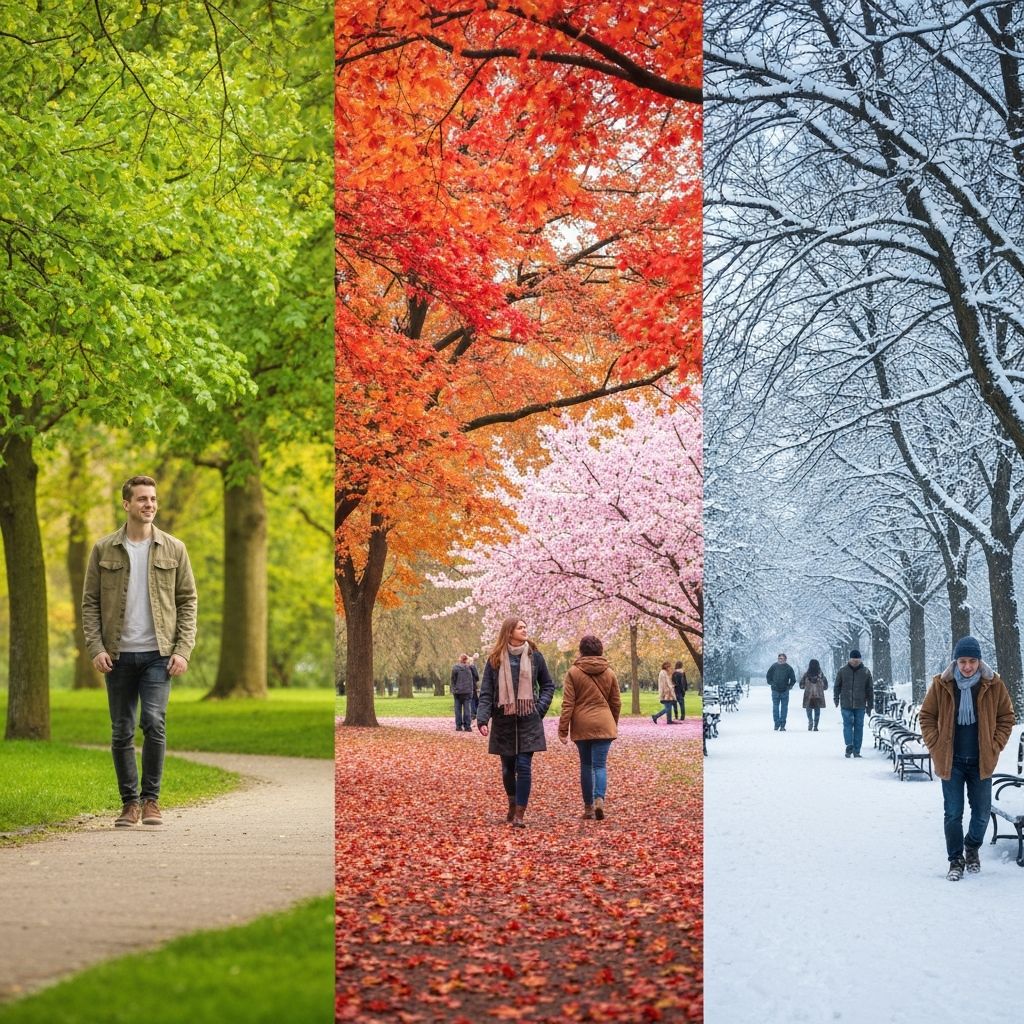
Research examining seasonal activity patterns demonstrates consistent trends across populations in northern climates:
- Spring & Summer: Typically associated with increased outdoor activity, longer daylight duration, and favorable weather conditions promoting spontaneous movement
- Autumn: Often shows moderate activity levels with gradually decreasing daylight and cooling temperatures
- Winter: Frequently associated with reduced outdoor activity, shorter daylight duration, lower temperatures, and precipitation increasing barriers to movement
- Individual variation based on climate adaptation and personal preferences
- Geographic location substantially influences magnitude of seasonal change
Physiological Mechanisms
Multiple physiological and behavioral mechanisms underlie seasonal activity changes. Circadian rhythm modifications driven by changing daylight duration influence alertness, mood, and motivation for activity. Temperature regulation requirements alter energy expenditure in cold environments. Direct weather barriers including precipitation and icy conditions reduce outdoor activity feasibility.
Metabolic Implications
Seasonal activity variations result in measurable differences in total daily energy expenditure between seasons. Studies tracking the same individuals across seasons document meaningful differences in daily activity levels, typically showing 15-30% variation between most-active and least-active seasons.
Adaptation and Habituation
Populations in extreme climates often develop adaptive behaviors maintaining activity despite harsh seasonal conditions. This suggests environmental barriers can be partially overcome through behavioral adaptation and habit formation, though complete compensation may not occur.
Educational Context: This article presents scientific information for educational purposes. It does not constitute personal health advice or recommendations. Individual circumstances vary substantially.
Related Scientific Content
NEAT & Environment
Understanding how environmental factors shape non-exercise activity thermogenesis.
Explore NEAT →Daily Movement Patterns
How lifestyle and environment influence spontaneous and incidental activity.
Learn More →